Friday, March 09, 2007

Two Voices on Obama


Nightshift Contributors Kamau B and D-Nice recently chimed in on the Barack questions.

Kamau B begins a series of Obama posts on his blog with the following:

For Blacks, Blasting Barack a Myopic Mistake

Black Americans are cool, at best, in their support of Senator Barack Obama. Central to that lack of enthusiasm is the criticism that he is not really black in the specific African American sense of the term. It is repeatedly noted that his father is Kenyan, his mother is white, he did not grow up in the United States and he was not outraged by Senator Biden’s simple remarks; therefore, he cannot intimately relate to the legacy and identity of the black American....Read more


Writing for Color Lines Magazine, Dorian Warren-aka-D-Nice offers the following:

Rainbow Redux
By Dorian Warren

I never thought I’d think or say this: I miss Jesse. With all the distracting hubbub about Barack Obama’s blackness, I’ve been missing the Reverend’s voice. Where is Jesse Jackson and why is he M.I.A.?

It’s hard for me to think about Illinois Senator Barack Obama’s campaign for presidency without immediately contrasting it with Rev. Jackson’s two runs for the Democratic nomination in 1984 and 1988. We’ve gone from “Keep Hope Alive” to “the Audacity of Hope”, from the “Rainbow Coalition” to “There is not a Black America and a White America and Latino America and Asian America -- there’s the United States of America..." Read More

Thursday, March 08, 2007

A Postmodern Porgy and Bess?

A Postmodern Porgy and Bess?
By T.N.

Now that Jennifer Hudson safely got the Oscar and had her day, I can finally voice my reservations about Dreamgirls and that song.

Firstly, as Jennifer Holliday explains in a recent interview, that song basically ruined her career. She was more or less Effie herself when was cast in the role, which she played a significant part in expanding into both acts of the musical (originally, that song was meant to be her swan song). Just a teenager, whose talent and ambition got her basically used and dumped by show business. It was pretty desperate and ungracious to sing it Oscar night from a neighboring roof-top, but basically, whose to tell her she hasn't the right? The song both made and ruined her career.

As for the song itself...Read More at Blue Gum

Wednesday, February 28, 2007

Black History Month

Black History Month?

As a person who’s been in school all his life Black History Month, which draws to a close today, has always been a peculiar time for me. In elementary school, it meant teachers taking time away from Social Studies class to instruct us about Martin Luther King Jr. and Malcolm X. In junior high school, it meant history teachers taking time to discuss Martin Luther King Jr. and Malcolm X. And in high school, it meant history teachers…you get the point. Harriet Tubman and Phyliss Wheatley were thrown in there somewhere, and at some point, some teacher filled us in with this “neat” bit of trivia, Carter G. Woodson started Black History Week.

Later on in life, McDonalds and other conglomerates really got in the mix and offered Black History Month Calendars, or other promotional materials bearing the face of Martin Luther King Jr. and Frederick Douglass. It eventually got to the point where by mid-January I’d see posters advertising Black History Month in stores in my neighborhood and on campus. Black History Month was the time for public television stations to introduce new documentaries, and television shows to premiere their sentimental tales about notable African American firsts or obscure sports and entertainment figures. February was also the month for my friends to joke about “why did we get the shortest month of the year?” or declare that “every month should be black history month.”

However, this year, I could honestly say I did not have a black history month. For the first time since I lived in Haiti I did not attend one event that was specifically designated a Black History Month event. I did not get a free Black History Month gift with my “Value Meal Purchase,” nor did I learn about someone recently uncovered by 20/20 or ESPN. No one came up to me this month and said, “I just saw [insert either Michael Eric Dyson or Cornel West] give a talk, what do you think of him?”

This was not intentional at all and I actually attended other gatherings focusing on the contributions made by Blacks to history, but which for reasons that I do not know the intricacies of, were not promoted as Black history programs.

I haven’t figured out whether to be incensed or indifferent about this occurrence. Should I be concerned or consider it an anomaly? If the djembe drummers tap Black History month in the forest and I’m not there to hear it, is it still Black History Month?

Then again, maybe I’m the only one experiencing this absence.

Monday, February 26, 2007

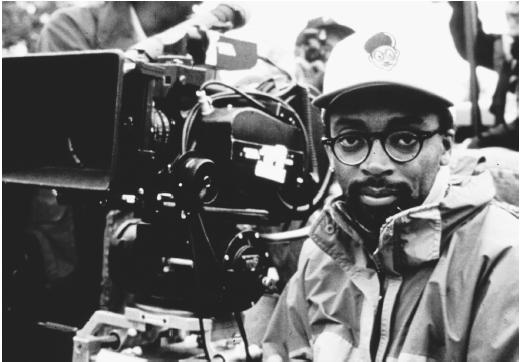
Spike Lee is 50!

While reading Black Enterprise the other day I saw something that took me by surprise. Spike Lee is 50. BE’s special entertainment issue did a profile on Mr. Shelton J. Lee who’s better known as Spike Lee, and guess what, Spike Lee is 50 years old—or at least he will be on March 20th.

But since I’m a proponent of the New Afrikan birthday system, he’s already 50.

Let that marinate for a second, Spike Lee is 50.

So what you say?

A friend of mine Phil likes to tell this story about when Lee’s movies first appeared in the 80s they were like rock concerts, or rather rap concerts, because previously white movie theatre lines were now teeming with young black moviegoers. When She’s Gotta Have it came out in 1986 The Beastie Boys had people rocking out with Licensed to Ill, we were swooning under Anita Baker’s Rapture, Run DMC was instigating us into Raising Hell, and the Notorious one was Duran Duran not B.I.G.

Public Enemy, the rap group, who Lee was often associated with earlier in his career were signing their first Def Jam contract back in 1986. Now as Chuck D tours college campuses and Flava Flav blurs the line between reality and minstrelsy, Spike Lee instructs us about what really happened with the Levees.

Spike Lee is 50?

As rappers beef between being 80s or 70s babies, make videos about chicken soupin’ it, makin’ it rain, walkin it out, or showcasing how they can get buxom black women to poke it out, Spike Lee turns 50, gives credence to the idea that getting older with dignity beats out fanning the flames of one’s status as a celebrity.

He doesn’t own the Nets or the Knicks, he’s just 50.

Another anecdote: last spring a student in one of my classes was doing a paper on School Daze. Usually when students come into my office to discuss their research papers, I’m good for throwing out a couple of selected readings off the dome. However this time, nothing was coming up. In fact, I had to work to submerge a few smirks and giggles as I thought of the countless hours, dorm rooms, coffee shops, couches and bottles of wine I’ve exhausted with friends over the past twenty years talking that film. These conversations are not documented anywhere else but in fond memories and broken hearts. Spike Lee is 50?

Oh Lee’s films do take and have deserved many of their critical beat downs. He’s been accused of being everything from color-struck to paternalistic, heavy-handed to vain (for his habit of inserting himself as characters in his movies). People will debate for hours whether Girl Six or She Hate Me are perverted, quirky or just outright offensive. More than likely, someone will scream out during any discussion of Lee’s filmography “he got robbed on Malcolm though. That film should’ve won the Oscar.” Was that really fifteen years ago? Is Spike Lee really 50? He is, ain’t he? Spike Lee is 50?

Now that Martin Scorsese has finally won his long-deserved Oscar, and American cinema needs a new legend who has yet to win an Oscar to fawn over, it appears as if Lee is now set to step into the role. He has the long career, the grey hair, ornery personality, and vision that stars flock to regardless of the budget. Now that Spike Lee has turned 50 black cinemaphiles can wait for the glorious day when Lee is feted for his body of work, and not just his latest work. The thought of what kind of film he’ll create to garner this illustrious prize inspires goose bumps. Maybe he’ll do a Thelonious Monk biopic. No, maybe he’ll do a story of a black upper middle-class family whose lives are torn asunder when their eldest son is arrested. I don’t know, but I can’t wait to see it.

Spike Lee is 50….

Saturday, February 24, 2007

Theorizing Blackness


Please drop in next week Thursday for this symposium at the CUNY Graduate Center.

"Theorizing Blackness"

A Symposium:

Participants

William E. Cross Jr. Professor of Social Psychology, CUNY Graduate Center

Leith Mullings (Anthropology, Poli Sci) Presidential Professor of Anthropology, CUNY Graduate Center

Jerry Watts (English, Sociology, Poli Sci). Professor of English, CUNY Graduate Center

Moderator: Ferentz Lafargue, Assistant Professor of Literature Eugene Lang College, The New School for Liberal Arts Thursday

Thursday, March 1, 2007

4:00 pm – 6:30 pm

Martin E. Segal Theatre

The Graduate Center of the City University of New York

365 Fifth Avenue

New York, NY 10016

(between 34th and 35th Streets)

This event is FREE and open to the public

For more information contact:

212- 817-2076

or

atakeall@hotmail.com


Tuesday, February 20, 2007

A New Crew is Born

Today is a new day at The Nightshift Chronicles. There are nine new contributors joining the blog. Their presence is a blessed occurence, so please keep an out for their postings, and support their ventures both here on The Nightshift Chronicles and elsewhere.

The Nightshift Chronicler

Wednesday, February 07, 2007

Bastards of the Party


Growing up in NYC I didn't really become familiar with the gang scene in LA until the emergence NWA. And even after they came out, crews like the Decepticons, A.T.C, and the Hollis Crew were fierce and time consuming enough that the Bloods and Crips barely entered my imagination. As I matured and "gangsta rap" and west coast rap artists become more popular so did the Bloods and Crips. The movie Colors also, played a major role in spurring my voyeuristic intrigue about what was really happening over there in LA. When the Stop the Violence and We're All in the Same Gang movements took hold, I was one of the many people asking why are we killing each other, but asking this question from the comfort of my Jamaica Queens home, that was divorced from the gang conflicts in LA. We may have had crews, crack and kingpins in New York, but it's hard for New Yorkers to really fathom the genocide that has been slowly mounting in Los Angeles. Worst of all, we may have mocked our brothers and sisters out west, threw up W's, and shaken our heads as our younger cousins Crip-walked, but for the most part most New Yorkers of my generation were spared the atrocity that our friends in Cali lived through.

New York, as is the case with many urban centers across the country has been infiltrated by Bloods and Crips offshoots in the last decade, a situation that became increasingly prominent during my time away from the city from 1998-2003. When I returned home in 2003, it was unsettling hearing younger cousins talk about friends who professed to being down with the Bloods, and watching news broadcasts of raids occuring in Brooklyn.

When The Game came out in 2005 he professed to put the West Coast back on the map and help set the record straight, and in some ways he did. He's the anti-Ice Cube in the sense that Cube was the gangsta that Amerikkka was not ready for, while Game was the latest in the calvalcade that America has been perversely embracing. With Game's record contract came shoe endorsements, a movie deal, none of which could have materialized without a platinum selling album, and the transposition of the Bloods from the organization that Americans hated and feared to the one that became a common place marker for the expendability of black life, and the indiscriminate nature of consumerist appetites for entertainment.

Now, in 2007, filmmakers Antoine Fuqua and Cle "Bone" Sloan have done what rappers have failed to do in 17years, put LA gangs in their proper context. Bastards of the Party documents two organizations, the Bloods and Crips, that are as American as the Democrats and Republicans, Coke and Pepsi, Yankees and Red Sox, except rather than settle their battles with ballots, bottles or baseballs, they do it with bullets. Bastards of the Party is a narrative about forty years of political disenfranchisement that stretches from the tail end of the Vietnam War to the current war in Iraq, a time period that also features the dramatic historical markers known as the Cold War, Iran-Contra, Apartheid and now Darfur.

It's an incredibly moving experience told through a cinematic lens as eloquently honest as a Morrison novel, and just as brutally vulnerable. Sloan's vision is not that of the outsider, but rather the insider. Like all great narrators he's the soldier that survived the war, the death camp and in return for escaping the grave, he's offered a medium through which to tell his story. Watching the documentary you'll notice that he's not as much offered a medium, but rather called up or haunted upon to bring this story to life.

In a generation that has long lived on the false dreams that Biggie or Tupac may have been the next Malcolm or Martin, Cle Sloan has come along to give us hope yet again, not that these slain civil rights leades will be revived, but instead that someone, somewhere will again show an appreciation for black life. This film asks if not now, when? If not Darfur, Haiti, then how about Compton? If not reform our schools, our streets, then how about our prisons?

I urge everyone to check their local listings to see Bastards of the Party, because as the documentary grimly implies, as each passes, so do the lives of the men and women seeking nothing else except survival.

HBO Viewing Schedule

NYTimes Review


Friday, February 02, 2007

Most Important Draft Pick Ever

While talking about the NBA with my brother the other day it finally dawned on me that the 2003 NBA draft is the most important draft of this decade, and may well have decided the future of some NBA franchises for the next twenty years. In fact, one can make a case that the 2003 draft was more important than the 1984 draft that yielded Michael Jordan, Hakeem Olajuwon, Charles Barkley and John Stockton. It remains unclear whether the 2003 draft will produce as many Hall of Famers as the 1984 class, but from a sure business model for many franchises, if not the league as a whole, it will have a far greater impact. The teams with the last two picks in the first round the Phoenix Suns, did better than most of the teams in the middle with their selections of Leandro Barbosa and Josh Howard respectively. The Bulls found a point guard in Kirk Hinrich and with this group the NBA found a nice blend of international and American talent that helped the league make further inroads in the worldwide market, while restoring the interest of fans in the United States.

You must think that I am crazy for saying that there is a more important draft than the one that produced Michael Jordan. And if you think that’s crazy, listen to this, I think Darko Milicic was a more important draft pick for the future of this league, than Michael Jordan.

Blasphemous. I know. But hear me out, I am not suggesting that Darko is a more important player for the history of the league, just a more important draft pick. My brother didn’t buy it either, but I’m still going to try to persuade y’all.

It was amazing to hear Darko blame the Pistons for the setbacks in his career while reading a recent article on him in the NYTimes. In his mind, it’s as if there was no way off of the bench for him. The strange thing about this is that Darko has been a bench player during his entire career. He was on the bench on his club team in Europe, rode the pine for the Pistons, and is now riding the pine for the Orlando Magic. Given that piece of information, it seems ludicrous that an organization would invest upwards of 15million dollars in a player with that resume. Making matters worse, is that he was surrounded by the most talented group of players to be appear in the same draft in years; Lebron James, Carmelo Anthony, Chris Bosh, Dwyane Wade, Josh Howard, Kirk Hinrich, TJ Ford, Leandro Barbosa and Boris Diaw. If you’re keeping count that list includes the league’s current scoring leader, Anthony, a defending championship MVP, Wade, and the reigning most improved player, Diaw.

In hindsight everyone knows that Jordan would go ahead of Hakeem and Bowie, but Bowie was an All-American at Kentucky and were it not for the injuries that derailed his career, he would’ve still been a lottery pick. The comparison to Kwame Brown is also off base because Brown was selected over high school peers Tyson Chandler and Eddy Curry, neither of whom have become the superstars that Darko’s classmates have become, and in the case of James and Anthony, already were.

If you’re a Pistons fan it must pain you to watch Chris Webber limp up and down that court knowing that your team could’ve easily had a frontline of Tayshaun Prince, Rasheed Wallace and Chris Bosh. Worst of all, it must really hurt to hear Joe Dumars refuse to admit his error.

But none of this really explains why I think Darko might be the most important draft pick in NBA history. There have been other players who did not live up to expectations, and Darko may very well end up being another Raef LaFrentz, who is the player he most reminded me of when I heard about Darko in 2003. However, there has never been a player in the annals of sports so gratuitously mythologized—nor has there ever been an organization to so blatantly fall for that myth. Sure the NFL produces a workout freak every year during its draft, but those players are still often alumni of top football programs, and not semi-pro players off of the street, which is essentially what Darko was when the Pistons drafted him. I’d go a step further and say that Darko was the NBA version of the fake pitcher that Sports Illustrated chronicled in an article in the late 80s who had a 110mph fastball and sundry other skills that were off the charts. In that article SI was poking fun at the cult of baseball scouting and the legendary characteristics often attributed to phenoms. No baseball team was misguided enough to draft that player, but for some reasons, with a wealth of NBA ready talent in their backyard, the Pistons saw fit to travel to the outskirts of Europe to check out the 18 year old seven footer who can run, jump, shoot threes, block shots and chew gum at the same time.

How ironic, that while Darko continues putting up inconsistent nights for the Magic and tries to convince himself that he’s actually an NBA caliber player, the magical 18 year old prototype who the Pistons were fawning over will be making his first all-star start. Although his name isn’t Darko, it’s Chris Bosh.

As of now we should be prepared to measure Darko not by his career output, especially in comparison to his other draft classmates, but to critically consider how deftly he and his agents, and their number one cheerleader at the time ESPN’s Chad Ford, hustled the Pistons into drafting him.

Jordan may have pulled many a magic trick during his NBA career (especially when playing the Knicks), but he could never have pulled off the caper that Darko pulled off on draft night 2003.


The Nightshift Chronicler

Saturday, January 13, 2007

M.L.K. Weekend?

It’s really startling to consider that less than forty years after his assassination and just as we are entering the second decade of the federal holiday recognizing his life and work, so many people see Martin Luther King Jr. holiday as a party weekend. I am not opposed to partying during “King Weekend,” as long as these parties have a purpose. For example if promoters for weekly parties decided to give a portion of that weekend’s proceeds to the NAACP Legal Defense Fund or countless other organizations working for the public good, I would have no objections to such a party on “King Weekend.” Unfortunately, that is rarely the case. Instead, what has occurred is that many people have turned what was to be a holiday honoring the African American crusade for freedom into a niche-marketing angle. If this is already occurring within our lifetime, I am afraid to imagine what this holiday will look like when our children are in their thirties. Will they be subjected to car salespersons promoting huge price slashes because it’s “King Weekend?” Better yet, will “King Weekend” be designated as the first major shopping event of the New Year, and department stores all across the country will roll out their Kente print banners to lure people in their aisles? I can see it now, someone will coin the phrase “The Dream Shopping Weekend,” and business owners will follow suit and offer 75% discounts on all items in their stores.

All of this may be light years away, but then again….

Thursday, January 11, 2007

Uncle Bush Needs You

President George Bush’s announcement last night that he intends to send 20,000 more troops to Iraq has been forthcoming for weeks. The fact that it comes on the heels of the disclosure that over 3,000 American soldiers have already died in combat in Iraq and another 10,000 have been injured severely enough where they could no longer perform, made the President’s proposal even more alarming. Bush’s desire to rebuild Iraq is rapidly decaying into a Sisyphean tragedy. The debate over the mission that the President has sent American troops is no longer over whether it’s noble or ignoble as was during the earlier days of the war in 2003, but now strictly over whether it’s suicidal. Considering that, the falsified evidence put forth to stir this latest stage of the Iraqi War was that Saddam Hussein possessed “Weapons of Mass Destruction” (WMDs), it’s worth pointing out that the President’s policies have seemingly become their own WMDs. The steadily increasing casualty rate, that in addition to the American military lives lost, more than 100,000 Iraqi soldiers and civilians have died since 2003 tragically iterates this last point.

The war in Iraq bears particular significance for the various installments of hip-hop generations. While broadcasters like Bill O’Reilly and the various sports networks are quick to identify controversial figures like 50-Cent, Allen Iverson and Eminem as members of the “hip hop generation,” they never discuss the connection age-wise and in terms of musical interest between the soldiers fighting in Iraq and those striving to make their way through poverty and despair in America’s inner-cities and rural areas. While they are fighting very different types of battles, many in this generation are inspired by the same music and artists, and I do not necessarily mean rap artists. Being a member of “the hip hop generation” does not mean that one solely listens to rap music much in the same way that being an American does not mean that one is automatically Christian. Yet, pundits have no qualms about invoking God and Christ when discussing whom these soldiers are turning to for guidance, while often being paradoxically muted about the connections between soldiers and hip-hop.

To bring this meditation to a close, poor people in the United States, particularly poor Black and Latino-Americans have been lured into military service as a means of escaping poverty for the almost a century now. Since the late 1970s, military enlistment has often been presented as a way of escaping prison, the other institution that preys on young Americans. However, there has been no other period in the last thirty years where the stakes have been higher for young people in the United States. Before he can send out those 20,000 troops to Iraq, President Bush must first find them and train them. This means that those of us with younger brothers and sisters, cousins, etc. currently graduating from high school we have to be particularly diligent in educating them about the realities they are facing. They cannot use military service as a means to pay for college or economic mobility without honestly being prepared to risk their lives. Failing grades, schools and poor job prospects/economy places poor people at an extreme disadvantage and we must resolve ourselves to make sure that prison and military service in an unjust war are not the prevailing options for our brothers and sisters. We must be determined in acknowledging that President Bush may need us, but he need not kill us.

The Nightshift Chronicler
Monday, December 25, 2006

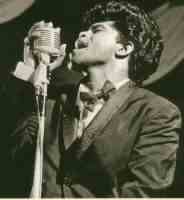
R.I.P. James Brown

It was rather immature of me, but since I was about seven or eight years old, most things were rather not mature of me, so immature may not be the correct word. I’ll always remember getting a particular sense of pride in knowing that many of the other kids on my block didn’t have a song like “Say it Loud (I’m Black and I’m Proud)” that they could sing along to. Surely, most of Puerto Rican, Dominican and South and Central American neighbors had their own cultural anthems in Spanish that I was not privy to, which actually made James Brown’s classic an even more powerful statement for me because everyone I knew understood the lyrics. You had to be Black, and Proud, to sing “Say it Loud,” and once I was introduced to the 1968 classic, I was to the umpteenth degree.

One particular memory of that song was when a group of friends and I were hanging around in the old parking lot behind what was then May’s department store in Jamaica Queens. There were about eight or nine of us and we had just finished one of our makeshift baseball games in the lot. As we stood there listening to the broadcast from either New Yorks 98.7 kissfm, or 107.5 WBLS, “Say it Loud,” came on and as I was wont to do, I started singing along, dropping in the refrain every time it was proclaimed. One of my friends started laughing at me—he was actually one of my tormentors—always poking fun at me for everything that seemed to be flaws in his image. He was two years older and like me he was overweight and wore glasses, that unlike me, he had to repeatedly re-orient back to the bridge of his nose. His constant adjusting of his glasses made them a more prominent feature on his face, than mine on mine, which probably explains why he felt incumbent to always call me four eyes.

Well on this day Sam figured that I again would be an easy target because I was the only one to have stepped off the railing and doing a two-step as I sang along to “Say it Loud.” The dirt specs from the rubber baseball that we used were whisking off my hands as I clapped them together. My other friends remained perched on the railing nodding their heads. Jesus dribbled the baseball on the pavement to the beat of the song, while Javier matched his pace by pounding the bat head along the same ground. When Sam pushed off the railing where he had been leaning and trying to mimic me started singing, “Say it loud, I’m white and I’m proud,” we all stopped what we were doing and turned our attention to him. As he laughed at his own antics, we tried making sense of his delirium taking place in the foothold of the sun. We would’ve had our heads cocked and looking at him cockeyed just for playing the fool, but that he was doing his trick in directly in the path of the sun made our squinting all the more pronounced.

I’ll never forget our friend Christian looking at Sam and saying with the utmost disdain, “what the f..k are you doing? You ain’t white! Sit your fat ass down.”

Sam tried explaining his dance, that he was just mimicking, that he was just…but no one was listening. James Brown was on and while they were willing to permit my offbeat singing and dancing, the crew was not willing to condone Sam’s blasphemy.

When I awoke this morning to the news that James Brown had died I immediately returned to that scene and countless other moments like that one in the particular where Brown’s music was a permanent fixture to post baseball game sessions. As we were being reared by hip-hop, with occasional visits by our pop aunts and uncles, our “godfather of soul” stood out the most. He was the only one from his generation who when one of his songs came on the radio, the dialed stayed in place. His most popular recordings may have been practically thirty years old by the time we were listening to them in the mid-eighties, but they felt as if they had just dropped the week before.

Brown’s recordings had not only reached the legendary stature of being timeless, but they were also timely, arriving at just the exact moment to help another generation deal with the complex issues of rhythm and identity.

I have a feeling that now that now that he has passed on Mr. Brown will be in peace, but not resting. He’s probably already speaking with Mozart about a song that he’s always wanted to do with him. And if you listen very closely to the heavens and to your soul, you will be able to hear it any day now.

The Nightshift Chronicler

Monday, December 18, 2006

My Melo, My Man

The NBA just handed down the suspensions from Saturday night’s brawl. Carmelo Anthony, currently the league’s leading scorer and a contender for most valuable player received the harshest penalty, a 15-game suspension. Knicks guard Nate Robinson and Nuggets guard J.R. Smith garnered 10-game suspensions for their role in the melee and Knicks guard Mardy Collins was hit with a 6-game ban from the court.

I believe the player suspensions were fair. Although, while he threw and landed a punch, I thought Anthony deserved a suspension more in line with what Robinson and Smith received.

What upsets me however is the fact that neither coach was suspended for their role in their fracas. Broadcasters and talk-radio hosts have been comparing the Knicks and Nuggets spat at the garden to the fight that erupted at the Palace at Auburn Hills toward the end of a Pistons and Pacers match two years ago, but Saturday nights events were dramatically different. Yes there was a fight that trickled into the stands, but the comparisons between the two ends there. The Pistons and Pacers were bitter division rivals and the Pacers were the lead challengers to the Pistons throne. In Ben Wallace and Ron Artest the principal protagonists in that fight, you had two of the most aggressive and equally petulant players in the league, therefore making it almost inevitable that as long as these two players continued battling against each other on the court, there was going to be a confrontation sooner or later.

At the same time, you also had two organizations and coaches that had a considerable amount of respect for each other. Pacers coach Rick Carlisle may have been bitter at his dismissal at the hands of Joe Dumars, but he, Larry Brown, Larry Bird and Dumars did not over-hype their falling out. If they did it would be an affront to the hard-working residents of Michigan and Indiana who have been coping with layoffs and firings for the last twenty years without nearly as lucrative back-up plans as Carlisle found in the Pacers. In short, you can not blame the coaches for this battle.

In the Knicks and Nuggets battle however, George Karl and Isaiah Thomas deserve to shoulder part of the blame and punishment for their role in instigating the fight. Karl and the rest of his North Carolina Tar Heel brethren/Larry Brown acolytes need to get over the fact that Brown was fired. Making snide comments in the press and trying to elicit sympathy for Brown is absurd, a fact that Phil Jackson pointed out last month when he called Greg Popovich for advocating for Brown, but none of the other coaches who have faced “unfair” dismissals. Beating the Knicks by sixty will not avenge Larry Brown, and if Marcus Camby were to have gotten injured as he’s wont to do, or worse Anthony, during the closing minutes of that fourth quarter, Karl’s pettiness could have cost his team even more.

Secondly, Isaiah Thomas needs to reel in his players. Thomas is one of the thirty greatest players in the history of his sport and he should realize the difference between players who talk a great game and those who play one. Right now he has a slew of players who talk much better than they produce. His guards are particularly guilty as they each are trying to carry on the legacy of their esteemed coach, but in media laden New York brimming with fans ready to throw any athlete under the bus regardless of how great he is (e.g. Patrick Ewing, Reggie Jackson and Alex Rodriguez) sometimes it’s best to speak softly and play hard and let your performance dictate your legacy (e.g. Derek Jeter and Charles Oakley).

Right now it’s all speculation whether or not Thomas instructed his players to commit hard-fouls on Nuggets players going to the basket, but as more evidence is presented, it’s becoming easier to believe that if he did not do it explicitly, it was conveyed implicitly. Knocking out someone at the end of a game should not be seen as a display of pride, but rather a brazen disregard for the mission at hand, play good basketball, win games, and in the event you lose, learn from your mistakes.

The Nightshift Chronicler

Monday, December 11, 2006

Romantic Call


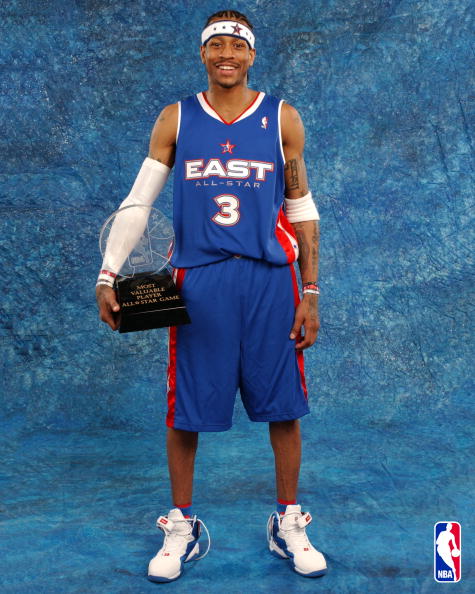
When this video came on, the first thing that came to mind was do these NBA cats know that they have the same fashion taste as Patra? Okay, I know many players who wear these arm sleeves first worn by AI, then female rapper Eve, probably do have some kind of elbow pain. All the exercises that they go through during the course of the year are bound to put enough strain on their elbows that they develop some kind of tendinitis. I'm not sure about some of the cats on college and in high school rocking these things though....


Anyways, the elbow sleeve was not the only discovery in this video. Little did I know/remember that the legendary 2pac had a cameo in this joint. I'm always a 50/50 cat on Pac, but I do remember enjoying his music and work when he was not involved in the east vs west fiasco.


As I continue longing for a few of those good ol' southern california days, the sight of Pac, Yo-Yo and Patra driving around, makes me nostalgic for not only the city of angels, but being young and having fun in the early 90s.

And while I'm at it, peace out to Jamaica High School class of '94 and everyone else who was getting down to Patra, Shabba and Mad Cobra back in the day.

The Nightshift Chronicler

Friday, December 08, 2006

I Ain't Sayin' Nothin'

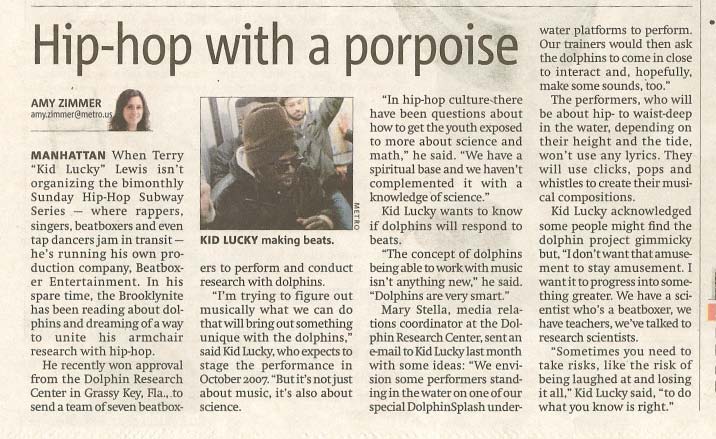
But I bet that this dolphin would be better than half the cats out right now

Tuesday, December 05, 2006

They Shootin' 3: Expendable Black People Zones


As the fallout over the Sean Bell continues the usual jockeying over who's more "innocent" is ratcheting up in the New York media. The police officers claim that they were "justified" in shooting, which is another way of saying that they are innocent of the accusations being leveled against them. On the other side, the survivors Joseph Guzman and Trent Benefield have the lack of a gun and their bullet-riddled car as proof of their own innocence. The police attorneys remained adamant that there was a fourth shooter, who miraculously has yet to appear. Along with taking needed attention from the two men lying in their hospital beds, this defiant search for the fourth shooter, presumably the lone guilty party in this case, this quest takes away from the most glaring issue: If the undercover officers were in the club investigating accusations of drug dealing and prostitution, why did they follow the non-drug carrying or prostitute bearing trio of Bell, Benefield and Guzman out of the club?

Wouldn't wielding all of their might on these three jeopardize their entire investigation?

Just a thought.

Remaining on this question of guilt and innocence for a few more moments, NYTimes Columnist Bob Herbert produced this opinion piece on the December 4th narrating another incident in which a group of young people were intimidated by undercover officers. Except this time there was no shooting and the multi-racial group of Ivy-League graduates, one bound for Harvard Law. Herbert's piece is entitled "Presumed Guilty" as in the two black men were presumed guilty of stealing the car in which they were sitting. However, as it turns out this article might have been well served being titled 'very lucky':

It turned out that the cops were acting on a mistaken computer report that Mr.
Rowley’s car was stolen. As frightening as the incident was, the four people in the car were
lucky that none of the cops opened fire. “I spent that night in jail,” said Mr. Rowley, “and
a lot of the officers told me that if this had been elsewhere — for example, if this had been
in the Bronx or Harlem — I’d have been dead.”

The quote comes from one of the victims pounced upon by the officers in front of the Union Square train station at 14th street in NY's Village.

I was alarmed (definitely not surprised) to hear the declaration "if this has been in the Bronx or Harlem — I’d have been dead.”

Are we all ready to agree that Black people living in certain sections of New York city are expendable? We know about the health concerns of living in communities without adequate grocery stores, and chemical plants that increases one's chances of asthma and lead poisoning. Should we just go ahead and list certain districts as EBPZs (Expendable Black People Zones)? Maybe come up with traffice signs, better yet, tolls to iterate that you are entering a EBPZ at your own risk.

For most of the twentieth century African Americans knew that we had to alter our behavior if we traveled through the South, the original EBPZ. The murder of Emmett Till brought these horrors to the fore of the nation's consciousness and those working in the Civil Rights Movemements of the 50s, 60s, and 70s did their best to eradicate as many of these EBPZs as possible. It appears now that we are now at the tipping point, either there's going to be a new proliferation of EBPZ as African Americans are gentrified out of the prime spaces in major cities and segregated into new/old ghettos--or and I hope this happens, that some serious changes occur and we never hear these words again "if this has been in the Bronx or Harlem — I’d have been dead.”

This would have to be a national programme, because as the case of Brandon Burks, the 16year old Michigan teen shot and killed on Sunday November 26th, this phenomena extends well beyond New York. Burks's case also involved a plainclothes police officer, this time one moonlighting as a security guard.

One might say that it's a tragic coincidence that Bell and Burk's deaths took place on the same weekend, but the facility with which African Americans have been able to avail testimonies of similar incidents suggests that these deaths go far beyond coincidence.

Police officers as a whole should not be unjustly indicted for the actions of a few.

Instead, what we need is a very frank national discussion about policing before the American nightmare of totalitarian regimes really take shape. The fact that so many African Americans in particular, and young people in general can easily rattle off incidents of harassment at the hands of police officers suggests that too many Americans are forced to vascillate between fearing officers and having to rely on them, neither of which is conducive to effective police work.

Thursday, November 30, 2006

They Shootin' 2: Legend of Bronco Blanco

I'm still thinking about the murder of Sean Bell. It's eery listening to people in New York talk about the death and rattle off the litany of names, Eleanor Bumpers, Michael Stewart, two of the many that proceeded the most famous prior to Bell's, Amadou Diallo.

It was also this week, that I received a link to this article by John Ridley appearing in Esquire, where Ridley announces "So I say this: It's time for ascended blacks to wish niggers good luck." Ridley's article essay homes in on two events in 2001, one which he believes did not deserve the backing and attention it received by African-Americans, the death of Cincinnati's Timothy Thomas at the hands of office Steven Roach. The other event, the immense power wielded by Condoleeza Rice and Colin Powell during that same year, of course climaxing with the events surrounding September 11th and its aftermath.

I would agree with Ridley that Rice and Powell do not get enough credit for their impressive professional accomplishments. I have long argued that Rice is an intriguing example of the post-Civil Rights story because her accomplishments have been superb, but her politics have been surprisingly anti-thetical to those traditionally associated with the movement. Rather than banish her, I think her presence calls for more examination of Black conservatism in the 60's.

However, it should also be noted that Powell participated in two of the most unpopular or at least controversial, and longest lasting wars in this nation's history, Vietnam, and the fifteen year's war in the Middle East. High ranking chiefs, Black or White in either of these wars, have managed to ascend to the status of their predecessors in WWI and WWII. But I digress....

Reading Ridley's article in light of the Bell incident, brought up a question, do we remember a wealthy or upper middle-class Black person being murdered by Police?

There are testimonies by figures like Danny Glover and their bouts with racial profiling, but can someone recall when one of these random, unjust, police shootings involved a relatively affluent African-American. I can't.

Some are reading this and saying a "Black person dead is a Black person dead," and that's true, but I would hope that we all could agree that class does matter. I'm not going to accept any arguments that rich Black folks stay above the fray that has to the death of our less affluent brothers and sisters, because if the police shootings are as random and inexpicably racist as we'd like to believe, then surely the cops aren't thinking, "That's Bob James, CEO of James Inc."

There's another reason that I bring this up. The Bell incident occured on the eve of the failed OJ Simpson interview and book release where he goes through a "hypothetical" reenactment of the murders of Nicole Simpson and Ron Goldman. Correct me if I am wrong, but when Simpson interrupted broadcasts of the '94 NBA finals and my friends were set to watch him and Al Cowlings escorted by police through LA, weren't they driving in a car? If I remember correctly, it was a big white Bronco wasn't it? I could be mistaken.

Oddly enough, the deadly weapon that Bell and his friends were wielding was a car. Just yesterday a police lawyer was on the air saying that the authors were justified in shooting because there was a weapon involved, "a car." A Nissan Altima to be exact.

No one should deny the fact that the officers involved in the Bell shooting believed there life was in danger when that car was put in gear. That said, we also recognize that shooting to impede the car also implies shooting to stop the passengers.

Of course it's coincidence that Bell would dovetail behind Simpson in the national headlines, random even, but no less random then the fates of these two men when they tried driving off.

Now if Ridley wants to argue that "It's time for ascended blacks to wish niggers good luck," then I hope that he realizes that he's at least a decade late in offering his greetings.

The Nightshift Chronicler

Wednesday, November 29, 2006

They Shootin'

This past weekend on Saturday November 25th NY resident Sean Bell was murdered by undercover officers. The officers were allegedly investigating a Jamaica Queens strip club for prostitution and drug trafficking, when allegedly mr. Bell and his friends who were attending his bachelor party became involved in a dispute at the club. Along with Mr. Bell, two of his friends Joseph Guzman and Trent Benefield were also shot, but they have survived.

The number of bullets belted out in this shooting have evoked comparisons to the 1999 Amadou Diallo incident in which the Liberian born immigrant was shot 41 times by New York police officers as he reached for his wallet. This incident also bears a strong resemblance to the Patrick Dorismond murder of 2000 where the Haitian immigrant was murdered outside a manhattan club after a scuffle with undercover officers who tried selling him drugs.

Sean Bell's murder has brought the spotlight back on to the NYPD and the tactics employed by their undercover officers. On Sunday Al Sharpton led a march through Jamaica, Queens. The resistance struggle does not end there however, and as another series of events planned for this week attest, while all violent encounters involving police officers do not end with death like Mr. Bell's murder, they are not as rare as many people believe.

If you want to have your voice heard, there are two events taking place today in Manhattan in which you can participate:

Public Hearing on Police Brutality at 4pm
Scho
mburg Center for Research in Black Culture
515 Malcolm X Boulevard
New York, NY 10037-1801
http://www.nypl.org/research/sc/sc.html

at 6:30pm
The Audre Lorde Project, a LGBTST People of Color Center for Community Organizing

FOR IMMEDIATE RELEASE: November 29, 2006
Communities of Color and Social Justice Activists mobilize for Picket Line &
Press Conference outside 6th Precinct Wednesday, Nov 29th 6:30pm – 7:30pm
(233 West 10th Street)
Media Contacts:
Dustin Langley 646-354-8056 dustin@action-mail.org or
Imani Henry 646-342-9673, ikhenry@alp.org

Monday, November 20, 2006

I Shouldn't Have Left You

It's been a long time, I shouldn't have left you, without a dope [post] to step to.....

It's definitely been a minute since I did this job and I feel that I may be a bit out of practice. So please excuse me the next few days/weeks as I try getting the skills back (that's for those of you who think I have skills in the first place.)

Fortunately, two of my favorite bloggers Gary Dauphin and JB have been banging out some jewels, and I know that those of you reading from the ATL have checked out my homie Mike Molina's work. If not, please get up on it...

As for what's been keeping me away, the usual, the church and the book. The job and the book. The friends and the book. But as you could tell mostly the book. We're making good progress, it's back in production, getting typeset as I type, so pray for me that it drops on May 8, 2007 as expected.

Man since I've been away the Democrats took back control of the house and senate, and just like keeping with the 1994 retro theme of this year's midterm elections, OJ came out of the woodworks to offer a hypothetical confession. There's surely a French Philosopher out there ready to explain this OJ confession to us, so si'l vous plait hurry up and write that book so we could understand what a hypothetical confession says about the soul/nature of the American psyche/condition in this day and age.

Speaking of French Philosophers I joined the blog roll at MadMaestroNews, check out my first post over for them that I put up today if you get a chance. Okay, they're not french philosophers, they're a hip hop production collective, but these days hip hop producers might as well be french philosophers. You'll get that one later tonight when you turn on 106 and Park or whatever the hip hop show on MTV2 is called.

And I'd be remiss if I didn't offer a belated moment of silence for Gerald Levert and Ruth Brown...


May you both rest in peace.


Till next time,

The Nightshift Chronicler


Monday, October 02, 2006

Underside of Black Income Gains in Queens

I know something is serious when my brother forwards me an article about it, which is the case with the article from Sunday’s New York Times discussing how Queens has become the first county in the country where Blacks have a higher median income than Whites have. On the surface, this article appears fairly innocent and the statistical information that it offers is relatively tame. However, once the author begins delving into possible explanations for this phenomenon the article becomes unsettling.

One of the reasons given for the shift in median incomes is the increase in West Indian and other Afro-immigrant populations into Queens. Implied is that these immigrants bring in a better work ethic and a more determined effort to overcoming the obstacles that have impeded the progress of African-Americans. What this line of argument always fails to consider however, is that West Indians and natives of other parts of the African Diaspora have always been present in the United States. There have been waves of immigration from the Caribbean and Africa for well over two hundred years. In the twentieth-century these waves of immigration have also been concurrent with African-American migrations in and out of this country.

For example, while the wave of immigrants from the Caribbean in the mid to late 1970s may have firmly entrenched themselves in neighborhoods like Laurelton, Cambria Heights and Rosedale, many African-Americans of the same age have now repatriated to southern states like Georgia, North and South Carolina, where they can get more for their dollars. There are also those Caribbean immigrants who have left Queens for the warmer climes of Florida. Thus, many of the homes who the people in Roberts’ article are proudly proclaiming have increased three times in value have also undoubtedly paid for homes three-times their size in other parts of this country.

As a person who grew up in the area discussed in this article, I also found the piece troubling because while the residents and scholars are quick to tout the income achievements, no one is discussing that the public schools, particularly at the high school level in these districts have suffered considerably during the last fifteen years. Three of the main high schools in charge of preparing students from these districts for college, Jamaica, Hillcrest and Thomas Edison, have had to overcome massive cutbacks to academic and extra-curricular programs as the white residents of these residents gave way to African-American, and now as African-American residents give way to Caribbean, African, South-Asian, and South-and-Central-American immigrants. In addition, with the passage of the Immigrant Reform and Responsibility Act in 1996, navigating the legal process has become increasingly precarious for immigrants who face expulsion from this country for minor offenses. It’s great to have a home triple in value, but what is that really worth when you’re stuck between dealing with a public education that fails to serve your children at an alarming rate, and a prison system that appears much to eager for their presence.

Therefore, when placed in this dour context the gains that this article suggests have been made by Blacks in Queens are arguably yet another pyrrhic victory.

Thursday, September 07, 2006

Mehret: A Documentary

I just found out about a fundraiser for this documentary taking place tonigh and encourage everyone to attend....Click here or on the title of this post for more info on the documentary.

There'll be an open bar from 7:30 - 8:30 and two screenings. The first is at 8:30pm and the second is at 10pm. Location is Southpaw 125 5th Avenue Park Slope. Complimentary Ethiopian Cuisine Provided by Queen of Sheba Restaurant.

Donations are 10 in advance and 15 at the door.